Posted on Leave a comment

Authentication

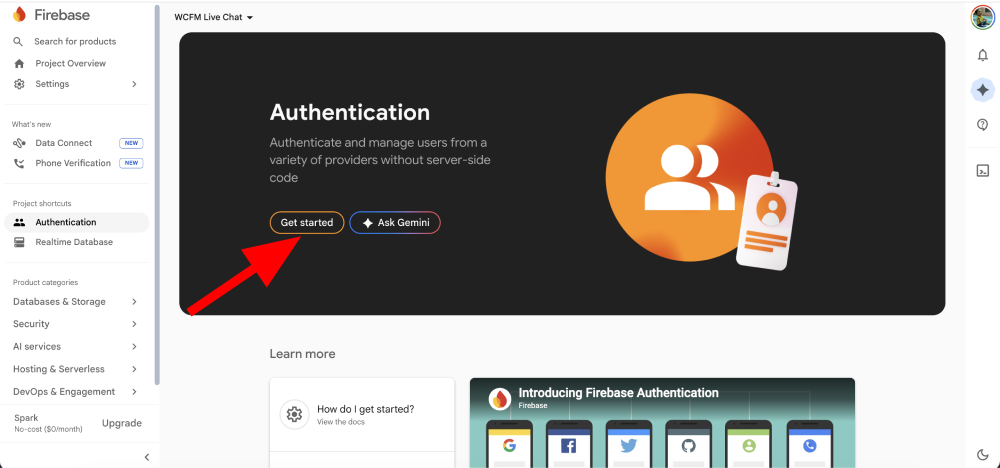
Step 1 : From the sidebar, navigate to Security > Authentication. On the authentication page, click Get started.

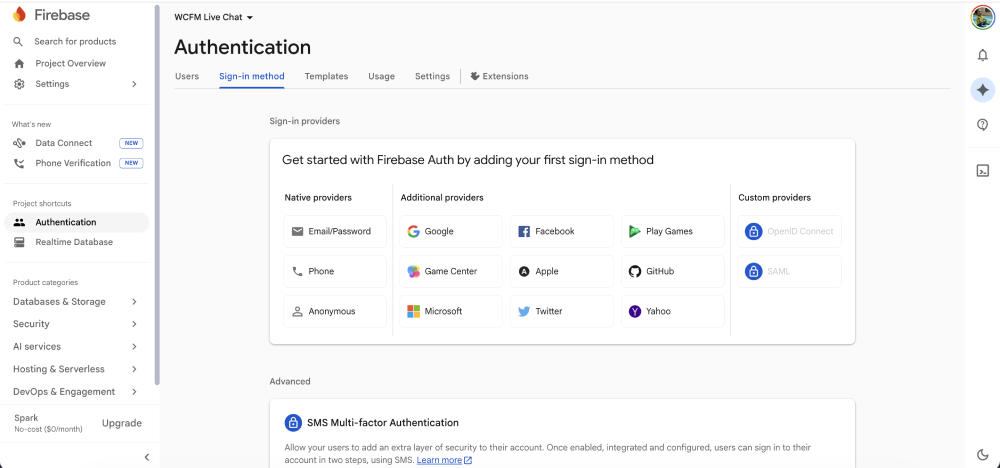
Step 2 : You do not need to enable Email/Password or any specific providers—simply clicking Get started (from the previous step) initializes the Identity Toolkit for your project, which is required for the system to function.

Posted on Leave a comment

Generate Admin SDK Key

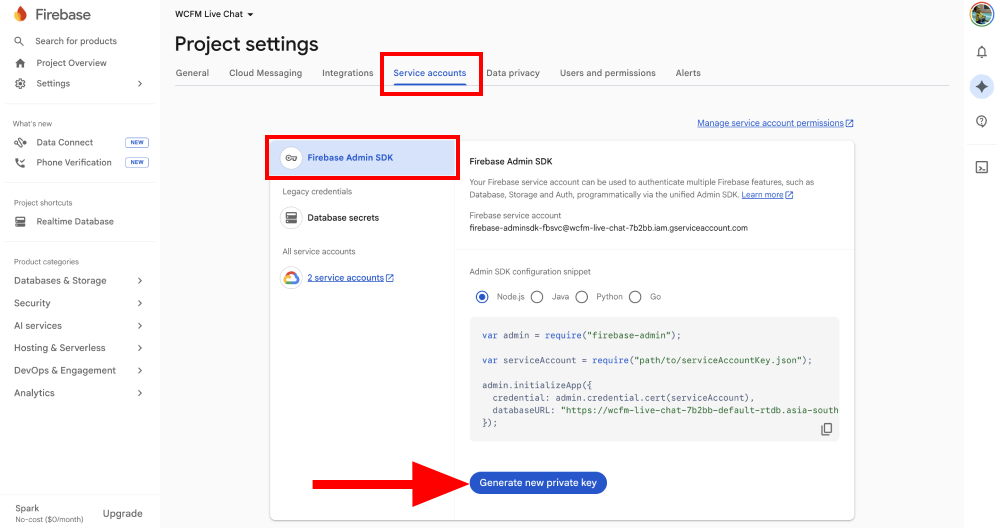
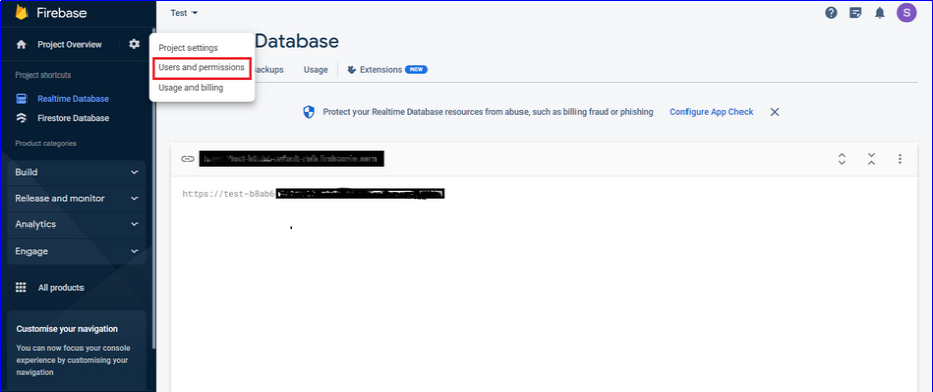
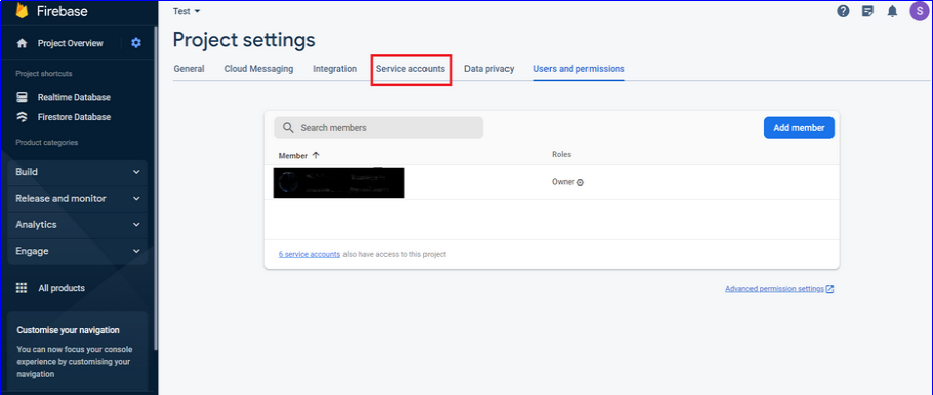
Step 1 : Click the Service Accounts tab under Project settings and select Generate new private key.

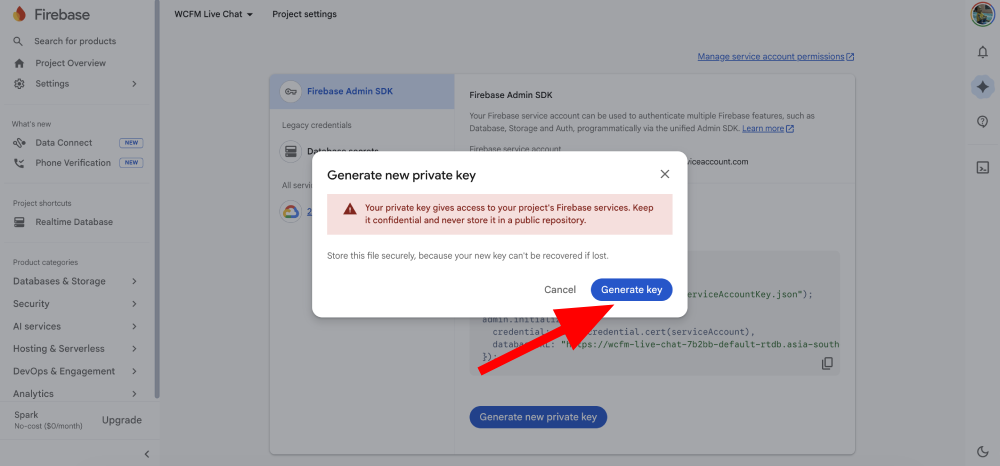
Step 2 : In the confirmation pop-up, click Generate key. This will download a JSON key file to your computer.

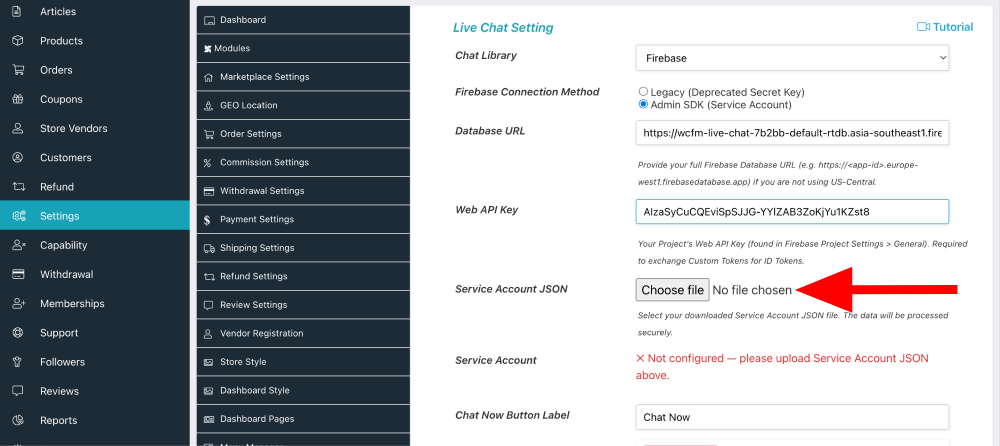
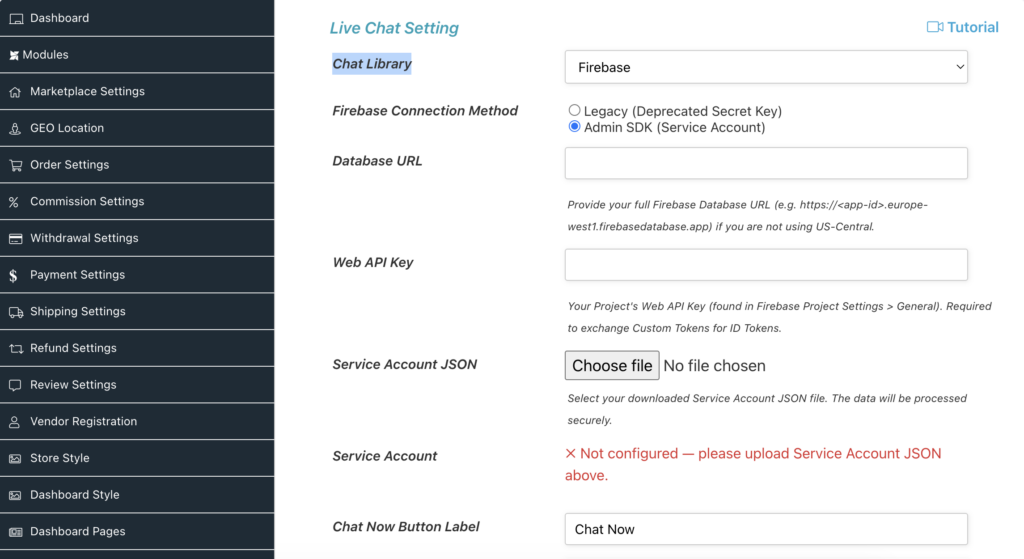
Step 3 : Go to the WCFM Chat Settings page and click the Service Account JSON > Choose file button to upload the JSON key file you just saved.

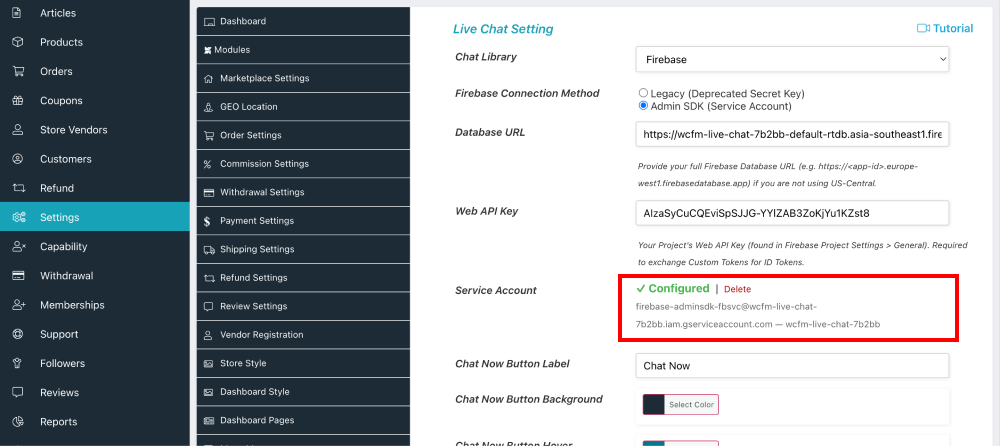
Step 4 : Once uploaded, the status will show as Configured. The Delete button allows you to remove this private key and upload a new JSON key file if necessary.

Posted on Leave a comment

Register Web app

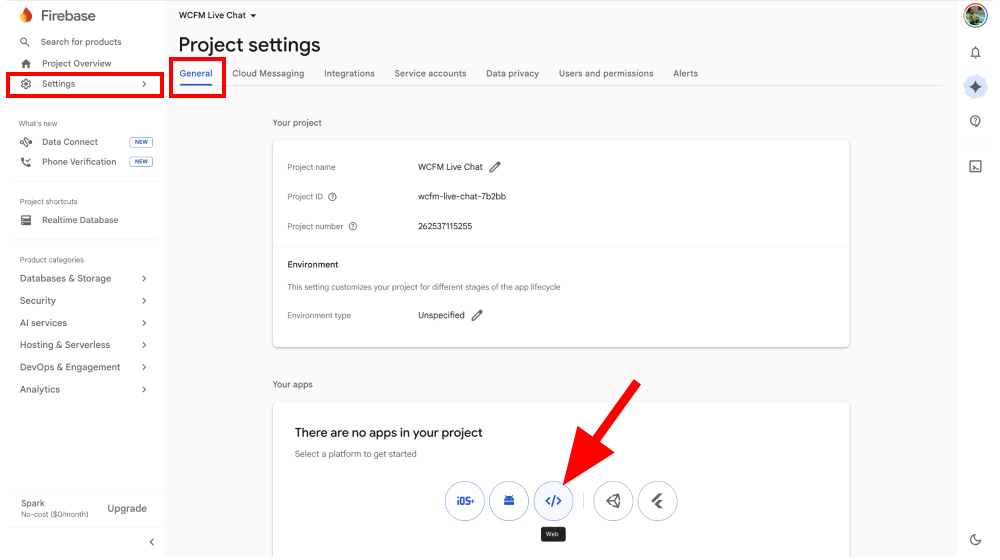
Step 1 : Create a Web App for your project.  Click the Settings menu in the sidebar, scroll to the Your apps section at the bottom of the General tab under Project settings page, and select the Web (</>) icon.

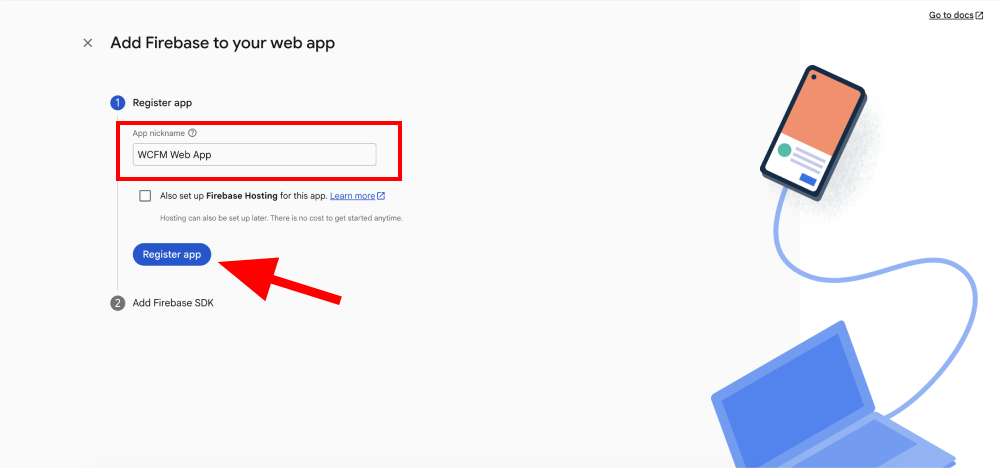
Step 2 : Enter an app name (e.g., “WCFM Web App”) and click the Register app button.

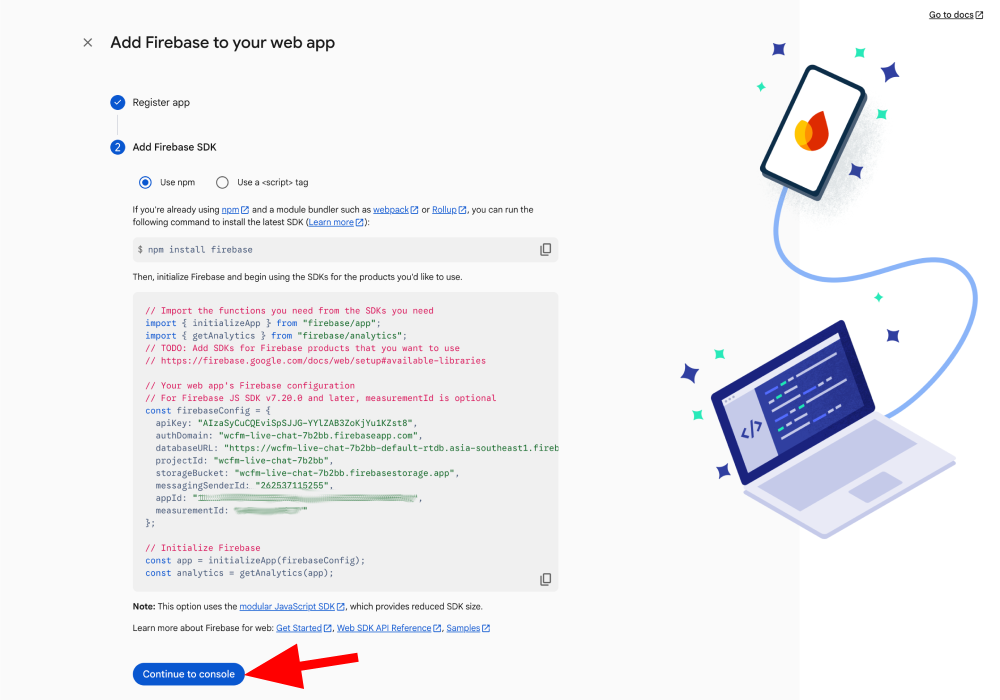
Step 3 : You’ll see the app configuration details. You can copy the apiKey now or retrieve it later. Click Continue to console.

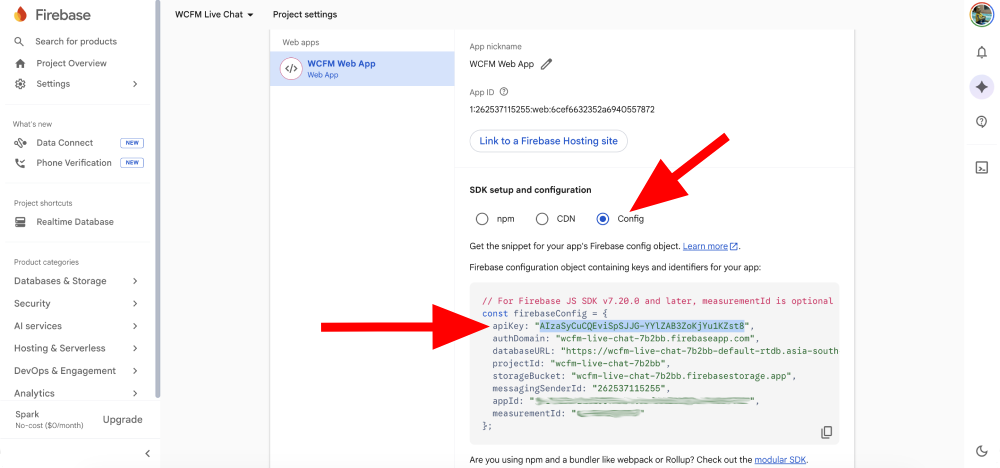
Step 4 : Copy the apiKey value (if not already done in the previous step).

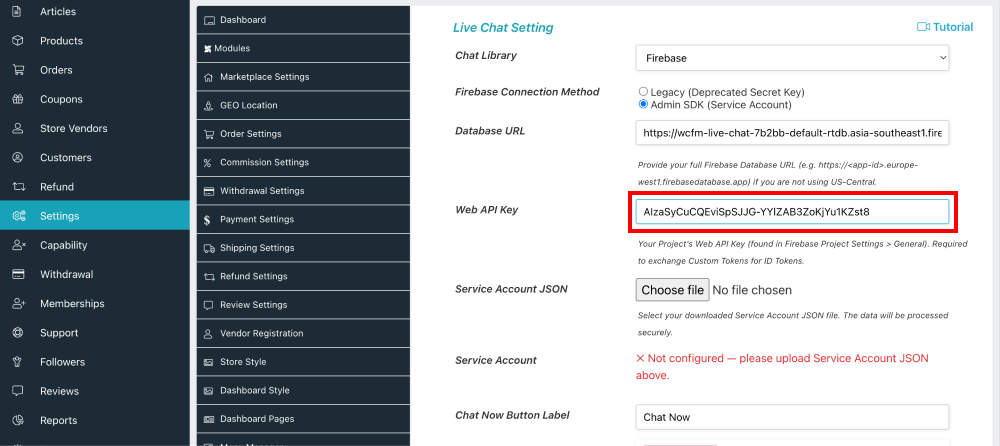
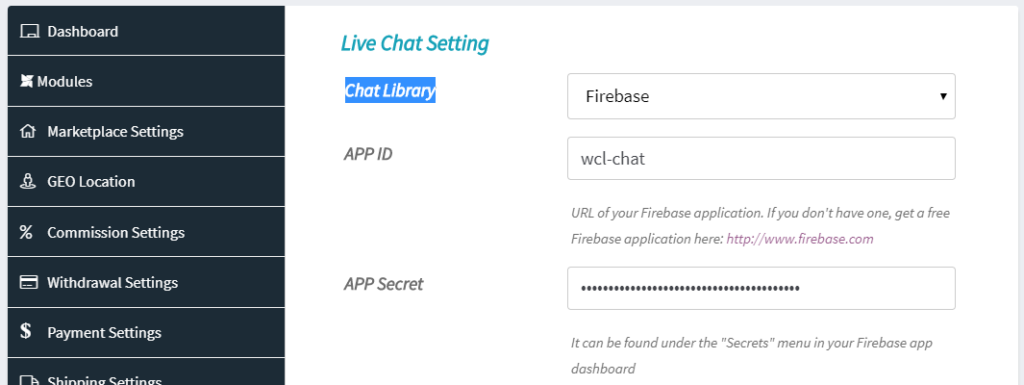
Step 5 : Paste the apiKey into  WCFM dashboard > Settings > Chat Box > Web API Key field.

Posted on Leave a comment

Configure Realtime Database

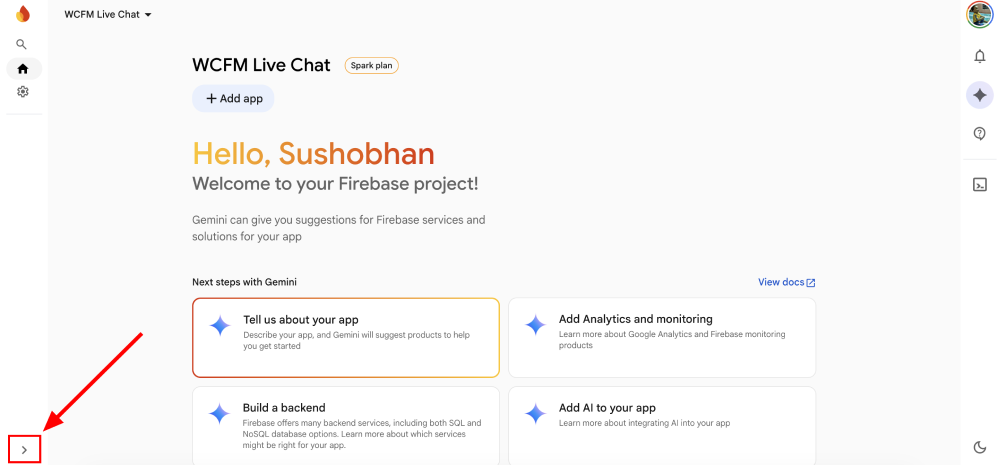
Step 1 : On the project home screen, click the sidebar toggle button
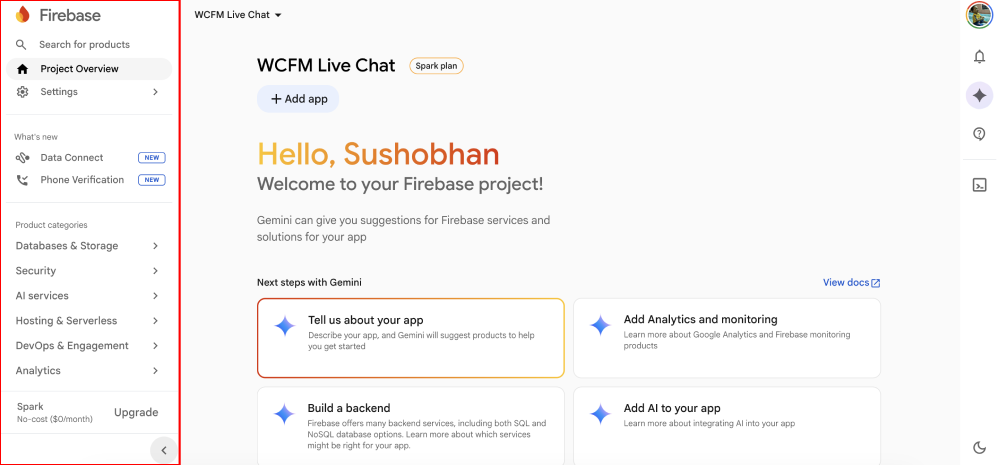
Step 2 : This will expand the sidebar menu.
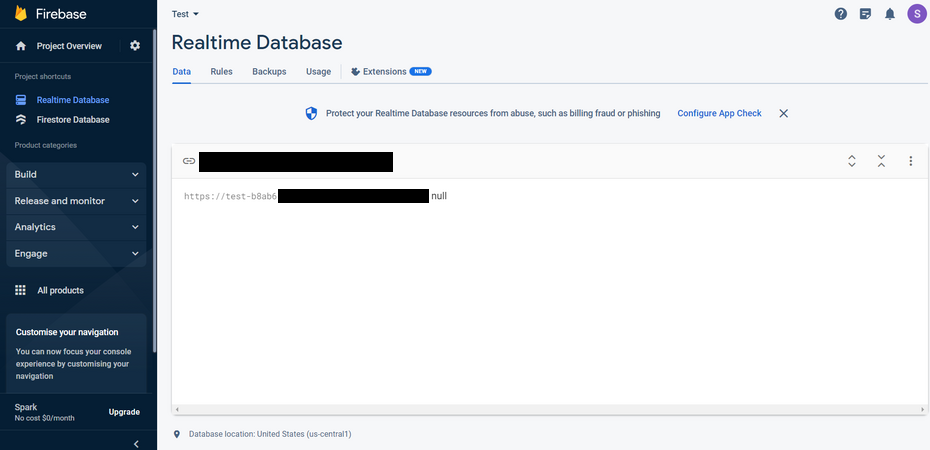
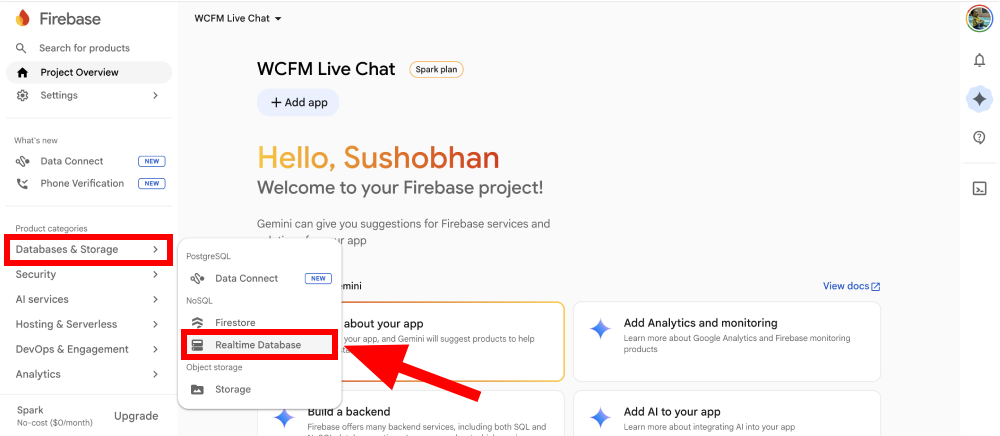
Step 3 : From the sidebar, navigate to Databases & Storage > Realtime Database
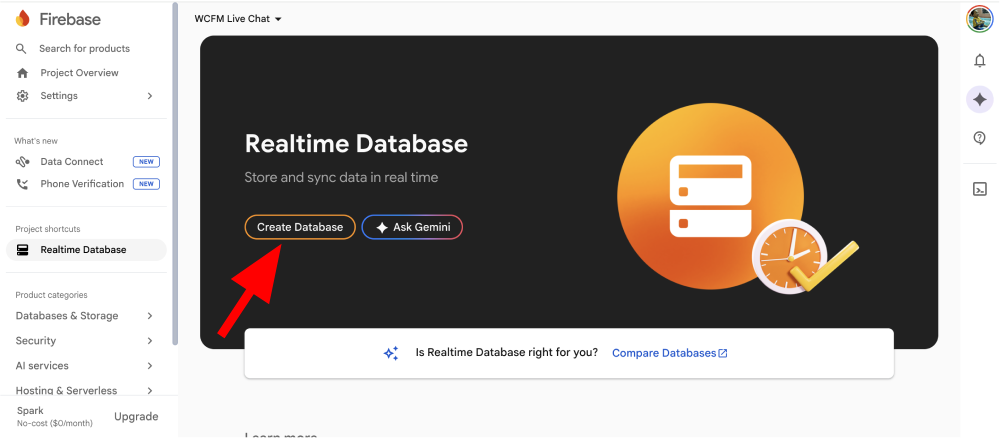
Step 4 : On the Realtime Database screen, click Create Database
Step 5 : Choose the database location and click Next
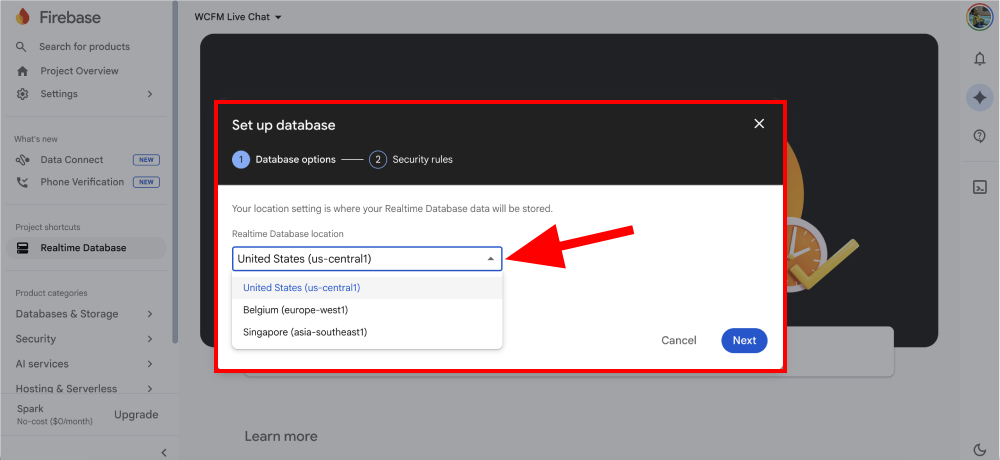
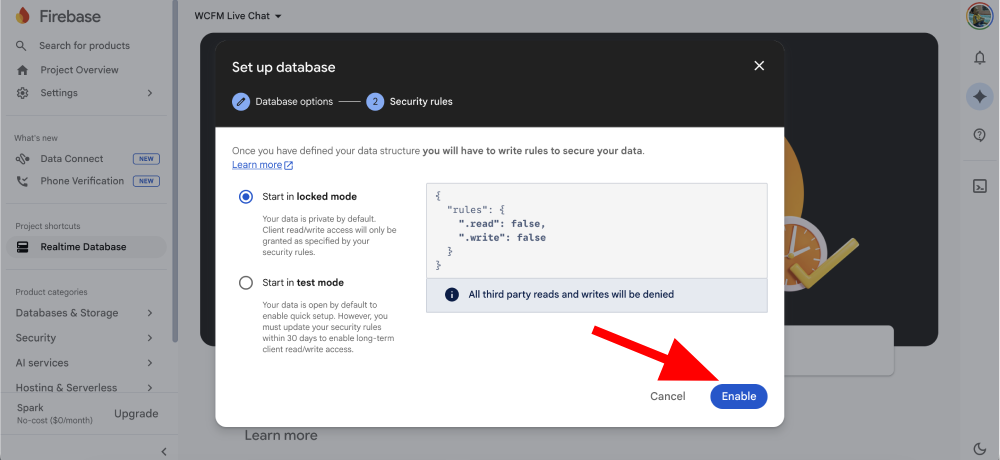
Step 6 : Click Enable
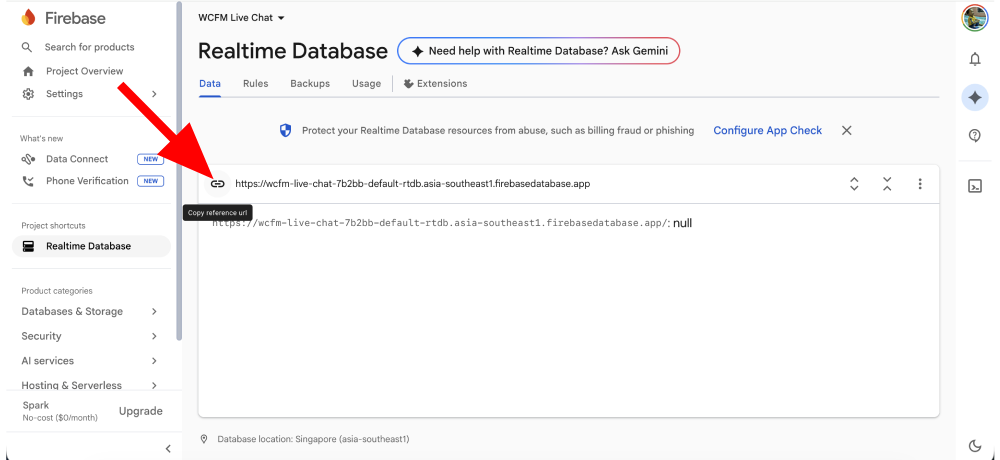
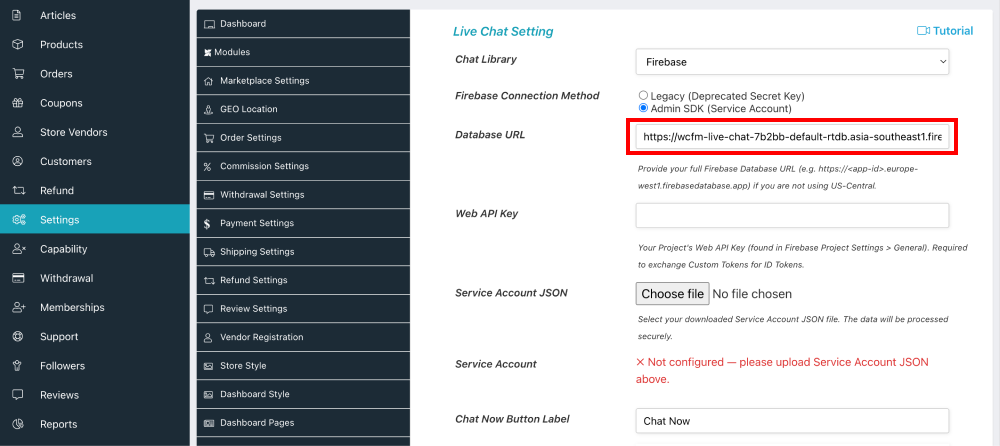
Step 7 : Copy the Firebase Database URL and add it to the WCFM dashboard > Settings > Chat Box > DatabaseURL
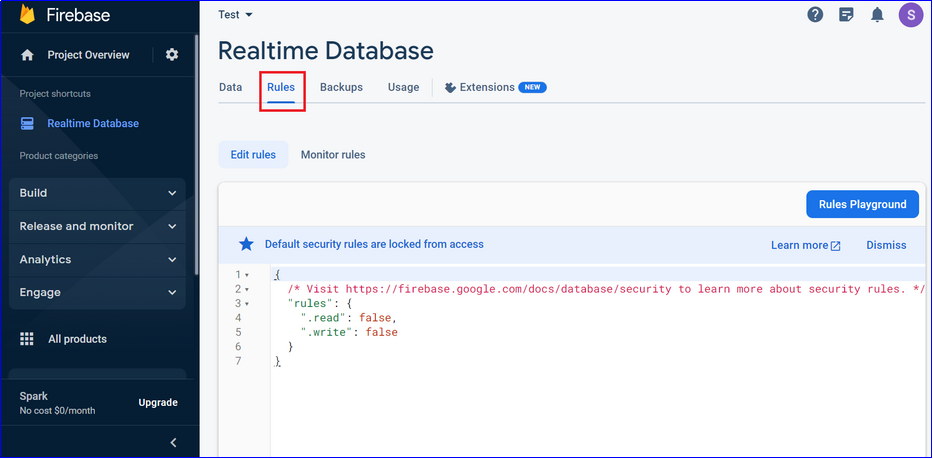
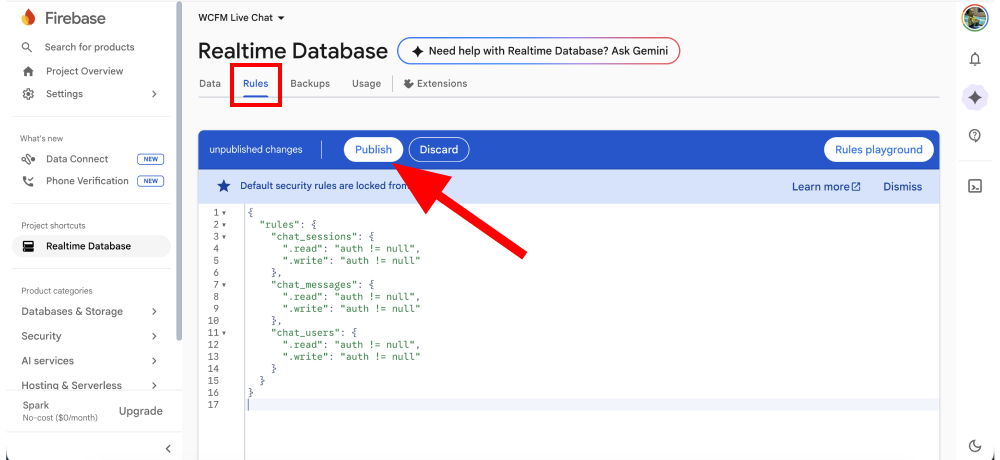
Step 8 : Click the Rules tab, copy-paste the following rules, and then click Publish

{
  "rules": {
    "chat_sessions": {
      ".read": "auth != null",
      ".write": "auth != null"
    },
    "chat_messages": {
      ".read": "auth != null",
      ".write": "auth != null"
    },
    "chat_users": {
      ".read": "auth != null",
      ".write": "auth != null"
    }
  }
}

Posted on Leave a comment

Create a Firebase Project

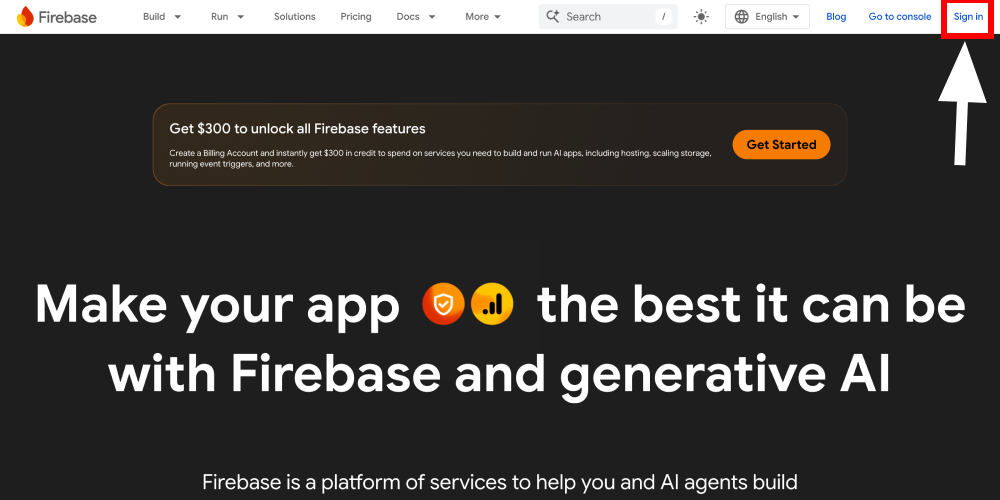
Step 1 : Go to Firebase website

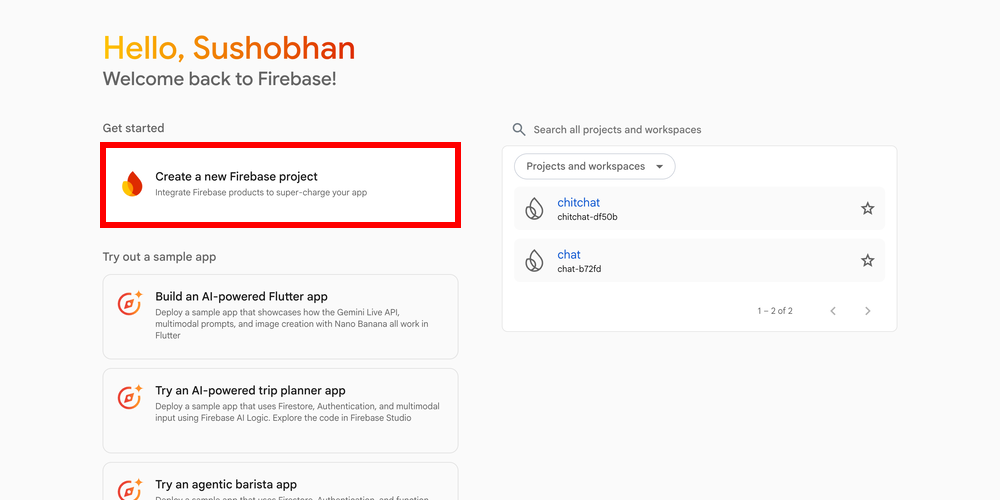
Step 2 : If you have a Firebase account, Sign in, else create an account

Step 3 : Click Create a new Firebase project

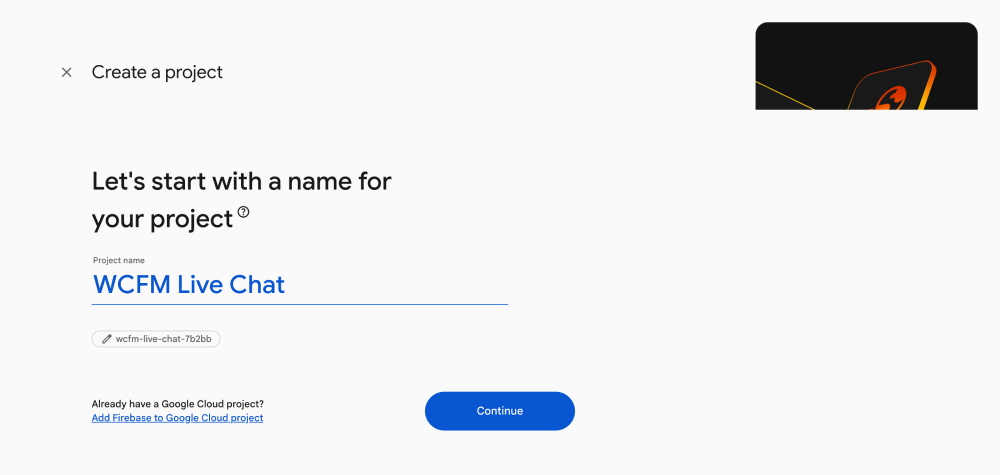
Step 4 : Enter a project name (e.g., “WCFM Live Chat”).

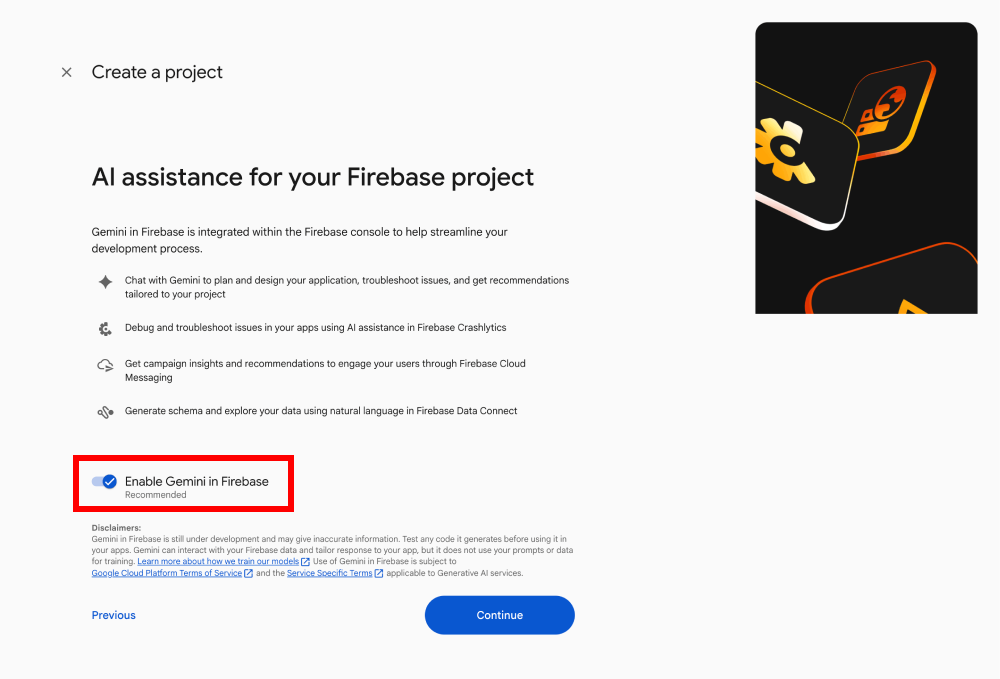
Step 5 : Turn On Enable Gemini in Firebase (optional but recommended)

Step 6 : Turn On Enable Google Analytics for this project (optional but recommended)

Step 7 : At the Configure Google Analytics screen, select your Google Analytics account and click Create Project

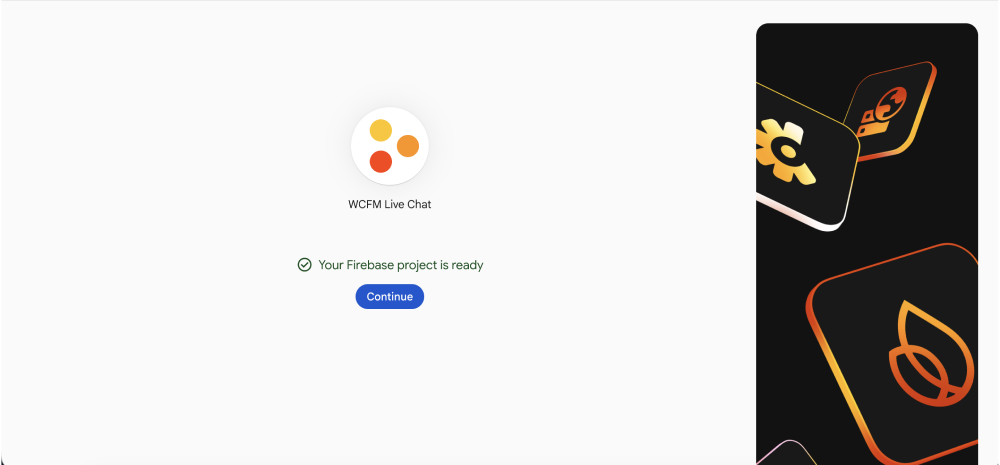
Step 8 : Click Continue once the project is ready.

Posted on Leave a comment

Live Chat Firebase Rules

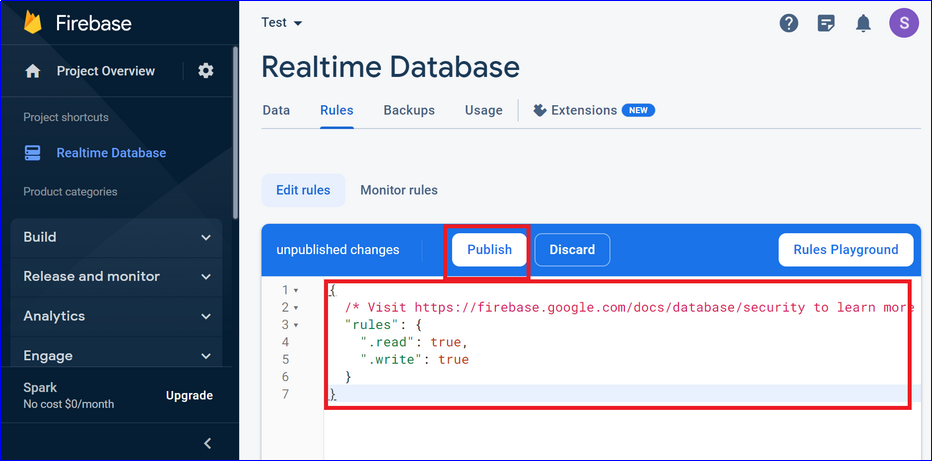
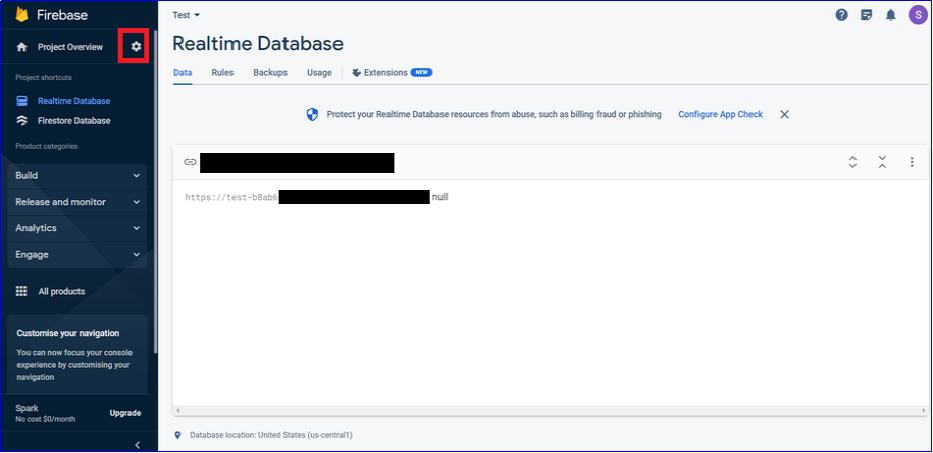
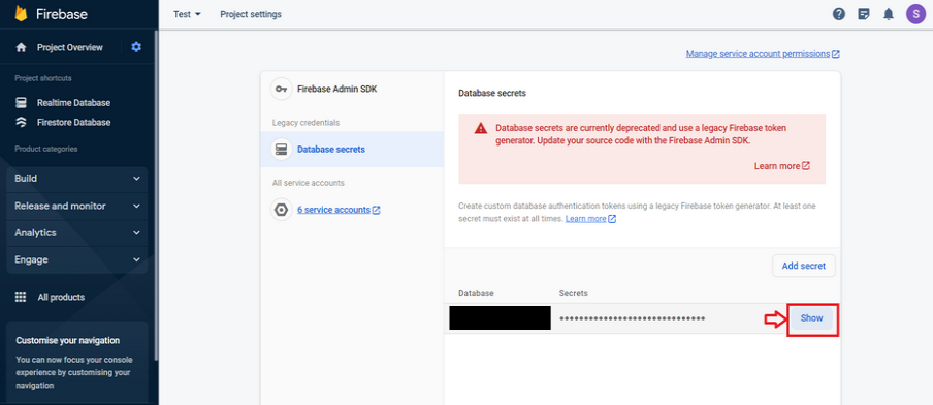
Step 1 : Click on Realtime Database from left menu.

Step 2 : Switch to Rules tab

Step 3 : Replace code with the following code (same as shown in below image, if it’s not same already) and click on Publish button Code:
{
"rules": {
".read": "true",
".write": "true"
}
}
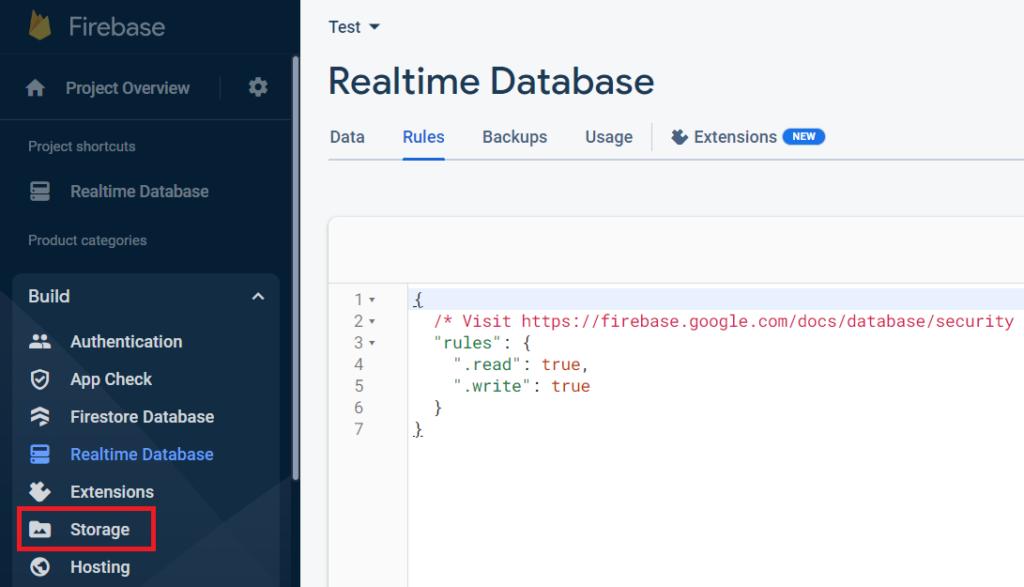
Step 4 : Click on Storage from left menu. 

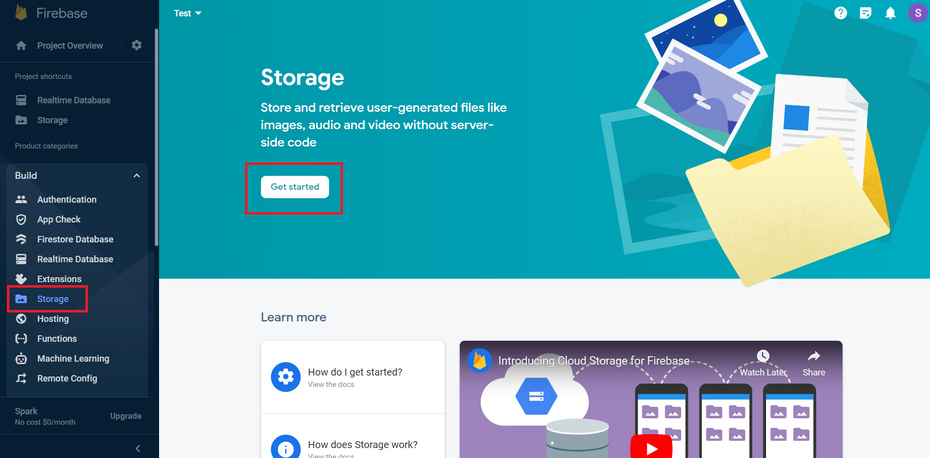
Step 5 :  Click on Get Started 

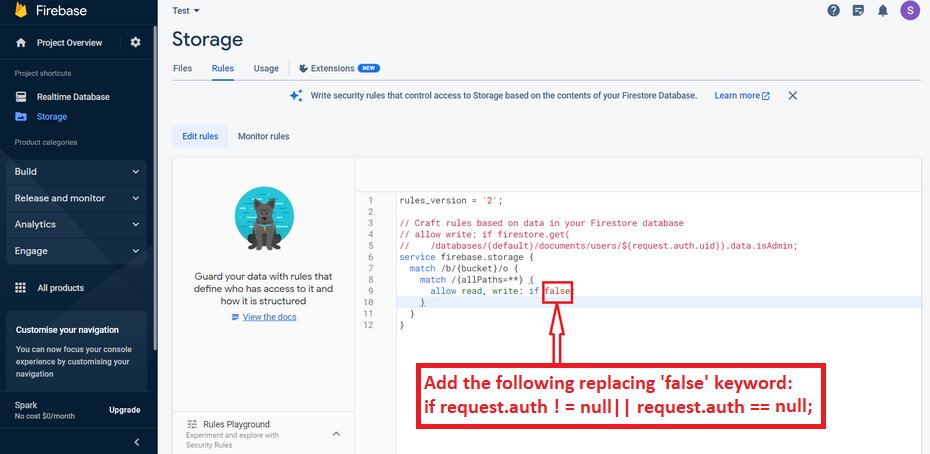
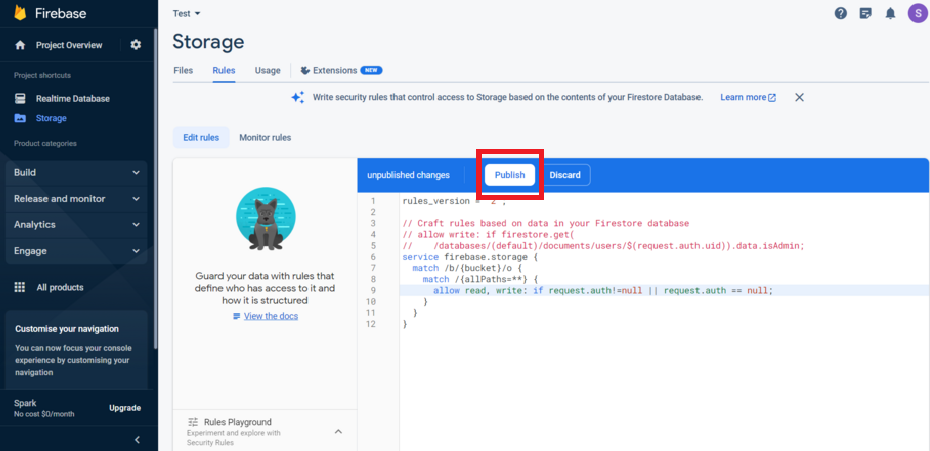
Step 6 :  Follow the setup wizard and set the Storage rules as shown below:

Step 7 :  Click on Publish as shown below.

Posted on Leave a comment

Live Chat Capability

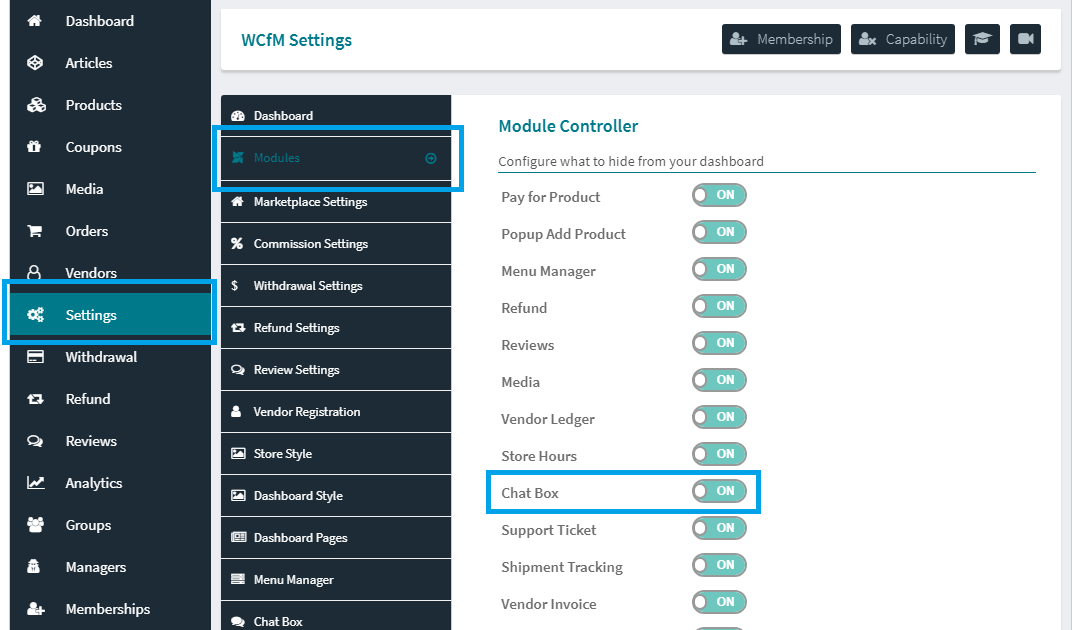
If you don’t want to have Chat Module in your site they you may disable just by on click.

Kindly go to WCFM Admin Dashboard -> Modules -> Chat Box -> Set this OFF


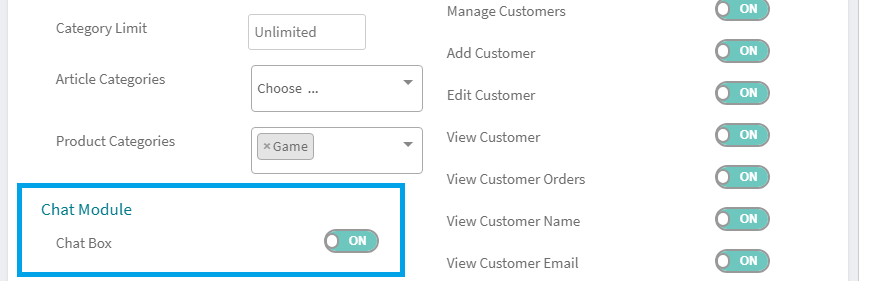
You may control “Chat Box” capability from WCFM Capability setting page.


You may control chat module availability as per vendor as well.

Membership specific chat box capability controller is also possible using WCFM – Group & Staff addon.